OUR HISTORY
A Story of Strength, Treaty, and Sovereignty

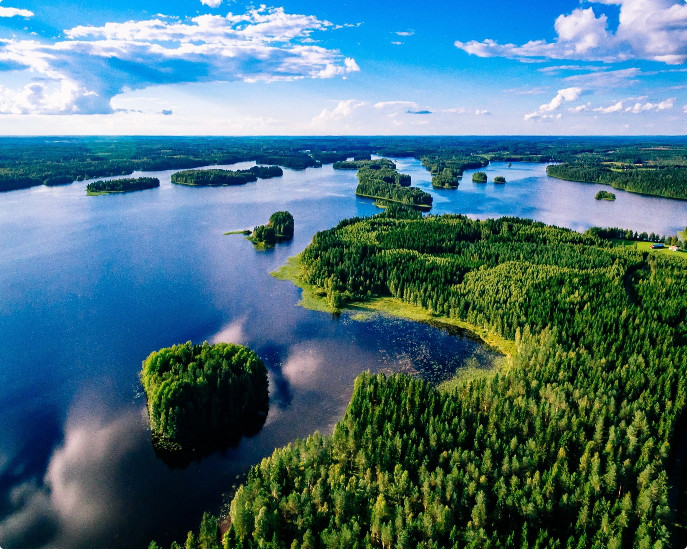
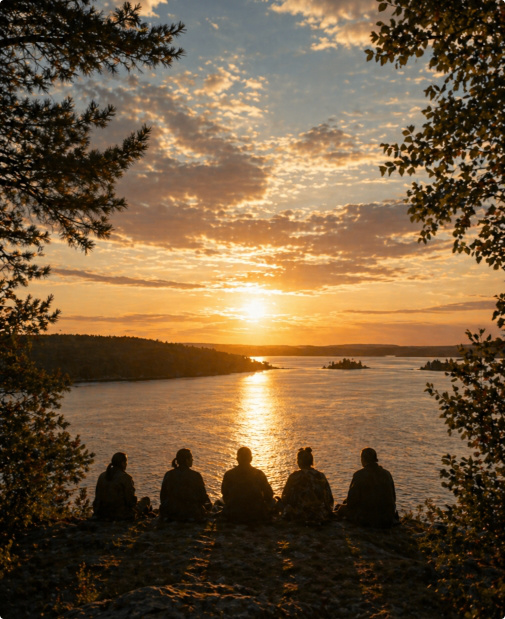
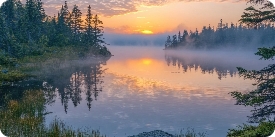
Shawanaga First Nation is a strong and thriving Anishinaabe community, nestled along the rugged beauty of Georgian Bay. Our roots run deep: in the land, in our language, and in the generations who have come before us. We carry forward the spirit of our ancestors with pride, living our culture, protecting our traditions, and building a future that honours who we are.
Before European contact, our ancestors lived across what is now called Ontario — from the Seguin River in the south to the Magnetawan River in the north, from the 30,000 islands of Georgian Bay to the Ottawa Valley in the east. These waterways and forests formed the heart of a thriving network of trade and diplomacy. Anishinaabe people traded fish and furs with the Wendat, shared copper from the west and shells from the east, and maintained peace through inter-Nation gatherings and alliances.
When the British gained control of this territory after the Seven Years’ War in 1760, Indigenous Nations insisted on formal agreements to protect our lands and way of life. This led to the Royal Proclamation of 1763 — a foundational document that recognised Indigenous land rights and affirmed that no land could be sold or settled without our free and informed consent.
In 1764, a historic meeting at Niagara between the British Crown and the Indigenous Nations of the Great Lakes region created the Covenant Chain — a relationship of respect, trust, and friendship, symbolized by a three-link chain. A massive wampum belt was gifted by the Crown and became the sacred record of that commitment, with the Anishinabek Nation chosen as its keepers — a responsibility honoured and renewed each year on Manitoulin Island.
But as settlers moved deeper into our territories, the promises of peace and fairness began to erode. In the 1840s, the government began selling mining locations around Lake Huron without consultation. Our Chiefs travelled to Montreal in 1848 to protest. A Royal Commission confirmed what we already knew: the land belonged to the Indigenous peoples, and treaties would be required before more could be sold.
The Robinson Huron Treaty
In 1850, Treaty Commissioner William Robinson was sent to negotiate what became known as the Robinson Huron Treaty. This was meant to be a partnership — a mutual agreement in which we would retain our rights to the land, waters, and resources in exchange for shared use and fair compensation. The Crown promised that:
Reserve lands would be held by the Ojibway for our use and benefit

We would receive a cash payment and an annual annuity tied to resource profits

We would retain the right to hunt and fish across Crown lands and unoccupied private lands
Our rights would be respected for all time
Shawanaga’s Chief Muckata Mishoquet signed this treaty two weeks later in Penetanguishene, standing alongside Wasauksing and other neighbouring Nations.
But the promises made in that treaty have been broken time and again. The land area defined in the treaty was based on a mistranslation — the Ojibway word tibadagun was understood by the treaty secretary to mean “miles,” when our Chiefs meant “leagues,” a measure three times greater. This led to a significant loss of land and a breach of the agreement’s intent.
Fishing rights were ignored as licences were handed to non-Ojibway commercial operations, devastating the fish stocks our communities relied on. In 1862, Chief Solomon James wrote to the province demanding exclusive fishery rights from Shawanaga to Parry Sound — but his voice was dismissed.
Despite treaty guarantees, restrictive laws passed after 1890 criminalised our hunting and harvesting practices. For nearly a century, provincial and federal governments overrode our rights with little regard for the agreements that were meant to protect them.
Despite treaty guarantees, restrictive laws passed after 1890 criminalised our hunting and harvesting practices. For nearly a century, provincial and federal governments overrode our rights with little regard for the agreements that were meant to protect them.
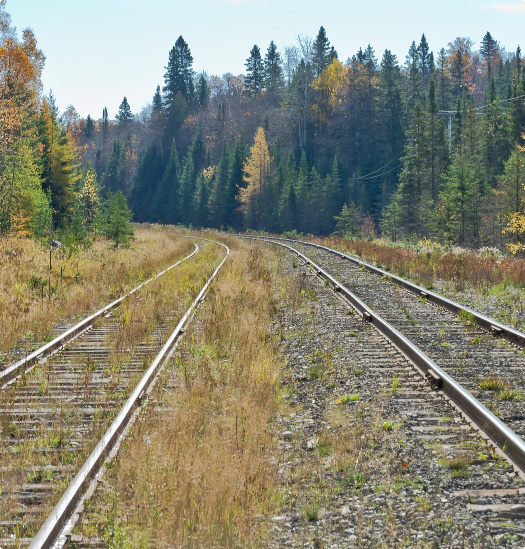
In 1905, a rail line was pushed through Shawanaga territory. A 100-year lease was signed with CP Rail, granting them use of approximately 100 acres of reserve land. That lease expired in 2005 — and to this day, a new agreement has not been reached.
In the 1950s, Highway 69 was constructed along our northeastern boundary, cutting through our lands without proper consultation or benefit to our people.
Guided by Community Leadership
Leadership at Shawanaga First Nation is rooted in service, accountability, and a deep connection to the community. Chief and Council are entrusted with guiding decisions that support the well-being of members today while planning for a strong and sustainable future for generations to come.
From the beginning, Shawanaga First Nation has upheld our responsibilities to the land and our people — even when others have not.
The story of our Nation is one of strength, resistance, and relentless commitment to our rights. We continue to stand for the recognition, respect, and redress that was promised — and still owed — to us.
Today, Shawanaga First Nation continues to thrive as a proud Anishinaabe community grounded in culture, connection, and care for the land. From education and language preservation to infrastructure and economic development, our Nation is moving forward with purpose — guided by the teachings of our ancestors and the vision of our people. We are more than our history. We are our future.